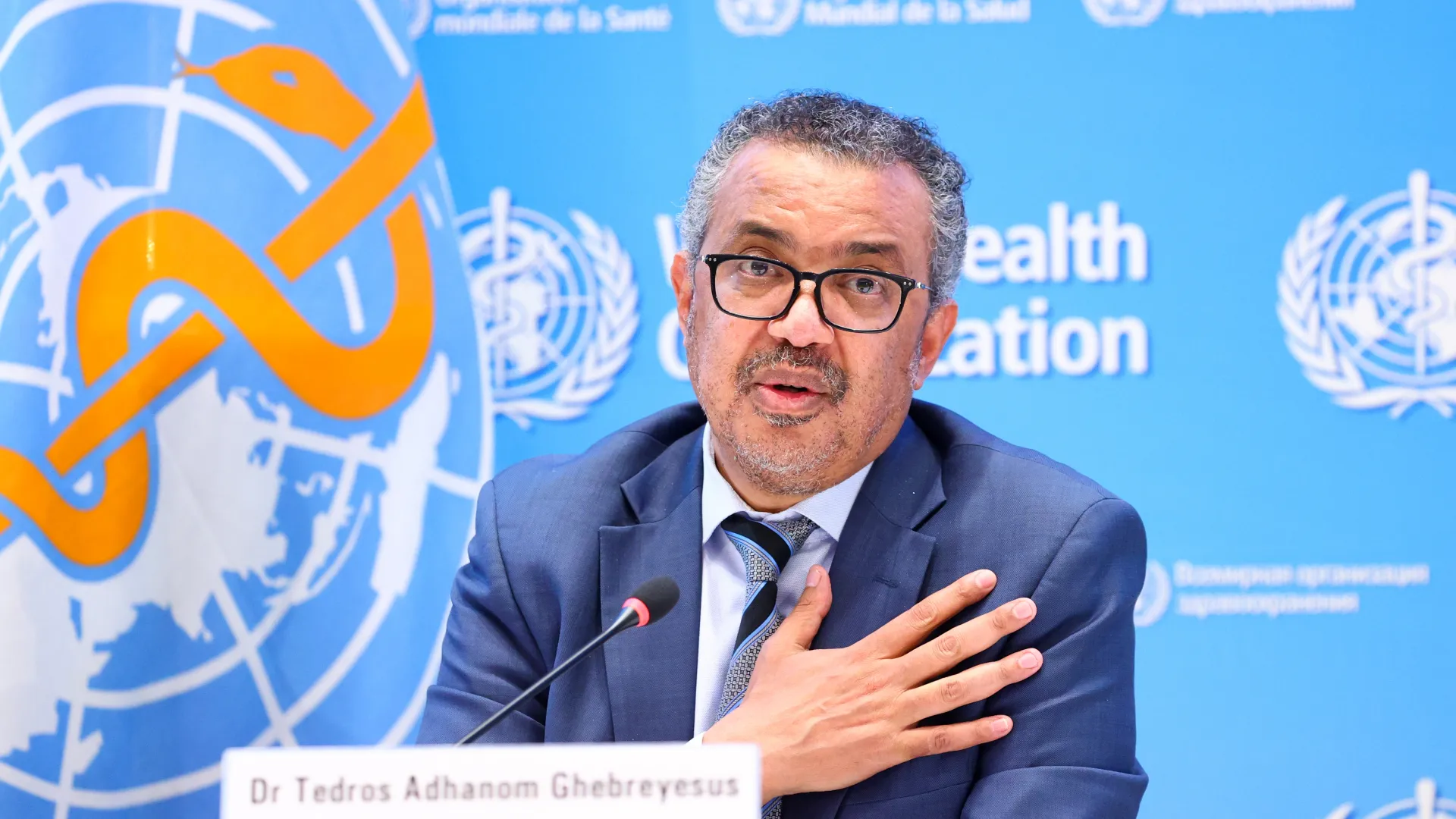
WHO Director-General Tedros Adhanom Ghebreyesus has warned that chronic underfunding and heavy reliance on earmarked aid threaten the agency’s ability to sustain global health gains, even as it reports progress against polio, HIV, cervical cancer and other major diseases.
Speaking during the 158th session of the Executive Board, Tedros emphasized that while WHO has continued to deliver despite staff cuts and shrinking budgets, critical areas such as preparedness, antimicrobial resistance (AMR) response, and health system resilience remain at risk.
“Although we have faced a significant crisis in the past year, we have also viewed it as an opportunity,” Tedros said, highlighting WHO’s achievements in 2025 despite one of the toughest funding crises in the organization’s history.
Funding shortfalls forced the agency to reduce its workforce and exposed its overreliance on a handful of donors.
“This demonstrates why member states must continue on the same path and approve the remaining increases to secure the long-term stability, sustainability and independence of WHO,” he added.
Tedros outlined the agency’s accomplishments, noting progress against infectious and non-communicable diseases. WHO supported countries in controlling polio outbreaks, expanding HPV vaccination for cervical cancer prevention, and scaling up HIV prevention tools, including long-acting injectable antiretrovirals.
The organization also strengthened responses to malaria, TB, and neglected tropical diseases, while expanding access to essential vaccines, medicines, and health services, even in conflict zones and humanitarian emergencies.
“WHO’s superpower is its convening power—the ability to bring together governments, experts, institutions, partners, civil society and the private sector,” Tedros said, underlining the importance of global cooperation.
He highlighted the organization’s work in training health workers, expanding digital health systems, and deploying rapid emergency response teams, which collectively support millions of people worldwide.
Tedros stressed that sustained and predictable financing is essential for WHO to continue delivering on its mission.
“We need a WHO that is no longer a contractor to the biggest donors—a science-based organization free to say what the evidence says, without fear or favor,” he said.
He urged member states to increase assessed contributions and provide flexible funding to protect health security, strengthen preparedness, and maintain resilience against future health threats.
Despite challenges, Tedros framed WHO’s 2025 achievements as a story of resolve rather than austerity, driven by the dedication of its staff. “The story of 2025 is the story of the people of this organization serving the people of this world,” he said.